Most evacuation maps get taped to a wall during a fire inspection and forgotten by lunch. They yellow behind cheap plastic frames, the paper curls at the corners, and within a year, nobody can read the exit routes without squinting. North Coast Signs, based in Vista and serving Carlsbad, built six custom evacuation map signs for a local building that won’t fade, tear, or confuse a single occupant when the alarm goes off.
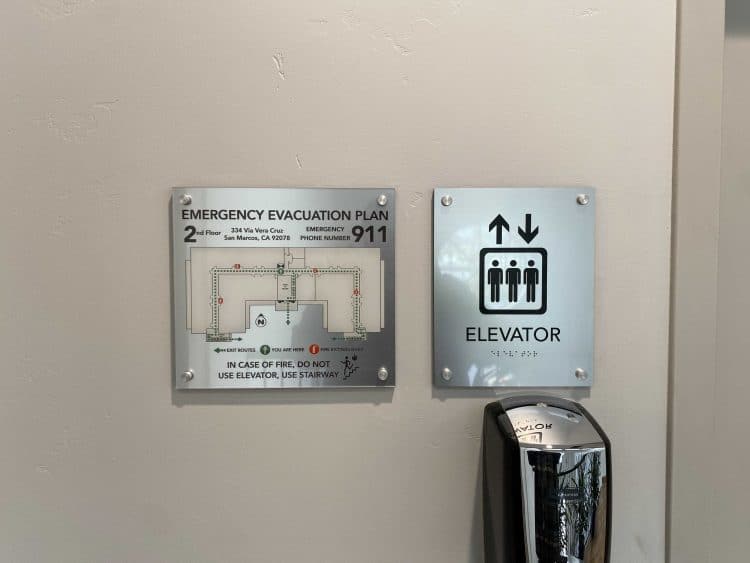
Every map in this project measures 10 inches high by 14 inches wide, and not one of them uses paper. We printed each evacuation layout on Synaps 8mil polyester, a tear-proof, waterproof synthetic material that holds its color and clarity for years in hallway conditions. That polyester sheet sits sandwiched between two tempered glass panels, each 3/16 of an inch thick with bullnosed edges, so there are no sharp corners in high-traffic areas and no frame collecting dust around the perimeter. The whole assembly mounts to the wall with brushed aluminum brackets at the top and bottom, giving it a clean, finished look that doesn’t scream “code requirement.”
Why Synaps Polyester Outlasts Every Paper Map in the Building
Paper-based evacuation maps have a shelf life that most building managers never think about until an inspector flags the problem. Sun exposure through hallway windows yellows standard paper prints within a couple of years, and moisture from HVAC fluctuations warps the sheet until the text distorts. Synaps polyester doesn’t absorb moisture, doesn’t tear when someone bumps the sign with a cart, and keeps its print sharpness long after a paper version would need replacing. We chose it for this Carlsbad project because the material matches the lifespan of the building, not the lifespan of the cheapest option.
Tempered Glass Isn’t Overkill for a Hallway Sign
Most evacuation maps sit behind thin acrylic or a plastic sleeve that scratches, clouds, and cracks with routine contact. Tempered glass at 3/16 of an inch gives the sign impact resistance and optical clarity that acrylic can’t match over time. The bullnosed edges eliminate sharp corners, which matters in corridors where foot traffic brushes past the sign daily. Two glass panels with the polyester print between them create a sealed unit that keeps dust, fingerprints, and moisture off the printed surface entirely.
Six Maps, Six Locations, Six Specific “You Are Here” Markers
We produced six individual second-floor maps, each one customized with its own “You Are Here” indicator based on the exact mounting location in the building. A single generic floor plan posted in six spots forces occupants to orient themselves under stress, and that hesitation costs seconds people don’t have. Each map in this project uses a light grey background for contrast and readability, and each one tells the viewer exactly where they’re standing and which exit is closest from that specific point.
Brushed Aluminum Brackets and Why the Mount Matters
The mounting hardware on an evacuation sign determines whether it stays level and secure for years or slowly tilts, loosens, and falls. We used brushed aluminum brackets at the top and bottom of each sign, fastened directly to the wall, with enough grip to hold the glass assembly flush and straight. There are no suction cups, no adhesive strips, and no picture wire involved. The brackets do two things at once: they lock the sign in place, and they give the installation a professional finish that blends with the building’s interior.
Your Building’s Maps Should Work the Day They’re Needed
Evacuation signage isn’t decorative; it’s functional life-safety infrastructure that gets tested when the stakes are highest. If your Carlsbad building still has paper maps behind plastic covers, the next inspection might not be the only reason to replace them. Call North Coast Signs in Vista at (760) 536-5454 and let’s build maps that tell every occupant exactly where they are and exactly how to get out.



Leave a Reply