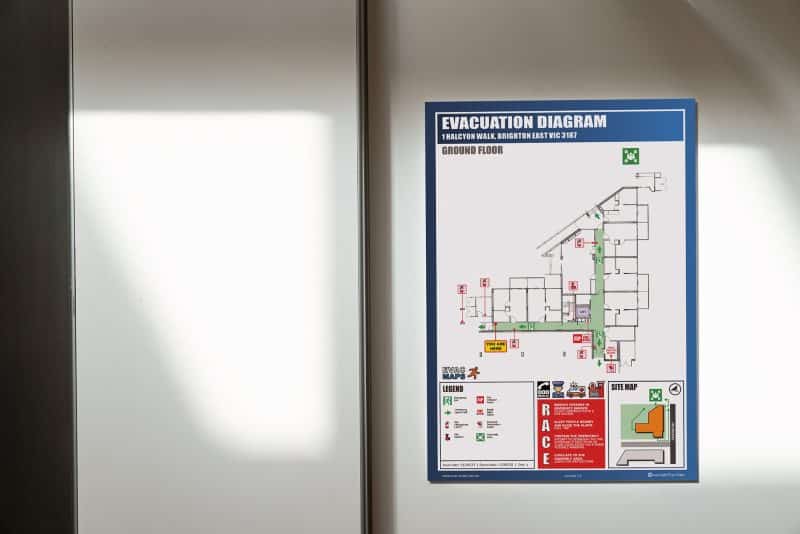
Evacuation maps need to match your building’s traffic level, lighting conditions, and budget reality, and knowing which material type fits your situation means getting compliant signage that lasts without overspending on features you don’t need. North Coast Signs fabricates evac maps using five material approaches, and the right choice depends on where the map hangs and how often people interact with it. Small offices need different solutions than hospital corridors, and matching material to application gets you code-compliant maps that stay readable when inspectors show up.
Paper and Laminated
Paper evacuation maps in protective frames work perfectly for small businesses, low-traffic back offices, and interior rooms where sun exposure stays minimal and physical contact happens rarely. The cost stays reasonable for startups and budget-conscious operations, and when mounted in protected locations away from windows and high-traffic hallways, laminated paper maps stay readable for years. We install these in break rooms, storage areas, and back corridors where they perform their job without requiring premium materials, and they pass inspections consistently when placed appropriately. Paper makes sense when traffic stays light and budget matters.
Load-Bearing Rigid Substrate
Direct-printed maps on PVC, aluminum composite, or acrylic handle moderate traffic in office hallways and commercial spaces where durability needs to step up from paper without jumping to premium pricing. The print bonds permanently to the substrate, which prevents separation and bubbling, and rigid materials maintain stability across temperature changes that happen in buildings without perfect climate control. We fabricate rigid substrate maps for multi-floor buildings needing consistent floor plan information on every level, and the material holds up well in typical office environments where occasional contact happens but heavy abuse doesn’t. Rigid substrate hits the sweet spot between cost and longevity for most commercial applications.
Glass-Encased
Tempered glass panels sandwiching tear-proof prints create evacuation maps that thrive in heavy-traffic environments like hospital corridors, school hallways, and hotel floors where constant contact and daily cleaning are standard. Glass protects the print from scratches and moisture while staying clear under fluorescent lighting that yellows cheaper materials over time, and bullnosed edges prevent injury risks in tight spaces. We build glass-encased maps with aluminum mounting brackets for locations where durability justifies the investment, and these systems deliver decades of service in demanding environments where other materials need replacing repeatedly. Glass pays for itself in eliminated replacement costs.
Photo-Luminescent
Glow-in-the-dark evacuation maps charge under normal lighting and stay visible during power outages, which matters in stairwells and exit corridors where code requires visibility during electrical failures. The photo-luminescent substrate glows for hours in complete darkness, keeping exit routes clear when occupants need guidance most during emergencies. We install these where life-safety codes mandate glow capability, typically in stairwells and windowless corridors where emergency lighting alone doesn’t satisfy requirements. Check your local fire code because certain building types require photo-luminescent materials in specific locations regardless of preference.
Framed Versus Frameless
Evacuation maps mount in traditional corner-clip frames or use standoff brackets and edge-grip systems for cleaner appearance. Framed systems cost less and install quickly in utility areas and back spaces, while frameless mounting with brushed hardware elevates appearance in lobbies and public hallways where aesthetics influence perception. Both methods hold maps securely when installed correctly, so the choice comes down to budget and visibility rather than function.
Match Material To Your Actual Needs
North Coast Signs is based in Vista, and we help match evacuation map materials to your traffic patterns, code requirements, and budget reality without overselling features you don’t need. Call us at (760) 536-5454 for evac maps that stay compliant and readable in your specific application.