ADA lawsuits start at $4,000 per sign and multiply across your property, exposing you to $200,000 before attorney fees even enter the picture. We’ve inspected properties in Vista, Carlsbad, La Jolla, Encinitas and San Marcos where 50 non-compliant signs meant quarter-million dollar liability exposure, all because property owners didn’t know their tactile signs violated federal requirements. North Coast Signs measures thousands of these signs every year and find that the majority fail basic compliance tests that plaintiff attorneys document first during their property surveys.
What Makes Tactile Characters Compliant?
The federal law requires raised characters to be between 5/8 inch and 2 inches tall, with 1/32 inch minimum rise from the sign surface and stroke widths calculated between 10 and 30% of character height. We use digital calipers for every measurement because federal inspectors reject visual estimates and those measurements must be consistent across every character on every sign on your entire property. Sans serif fonts make compliance easier because decorative fonts create ambiguous measurement points at character edges where curves meet straight lines, although the law allows serif fonts that meet strict proportional requirements. Character spacing follows mathematical formulas based on character height, with the uppercase “I” not allowed to be wider than other characters and the “O” having consistent stroke width throughout its circumference.
Where Must Tactile Signs Be Installed?
Every permanent room or space requires tactile identification regardless of whether you think blind visitors will use them, which means conference rooms, restrooms, stairwells, exits, janitor closets, electrical rooms and storage areas all need compliant signage. Signs must be mounted with tactile character baselines 48 to 60 inches from the floor, always on the latch side of doors with 18 inches of clear floor space that wheelchairs can access without door swings creating barriers. The permanent vs. temporary distinction creates legal headaches when conference rooms get founder names or storage areas become offices and previously exempt spaces become compliance requirements overnight.
Which Materials Actually Survive Commercial Use?
Photopolymer technology creates dimensionally stable raised characters that maintain precise edges for decades of use, while inferior alternatives using applied letters fall off after months of normal contact. We specify acrylic substrates with sufficient thickness to prevent warping that turns compliant characters non-compliant, because even slight curves in sign faces change the required measurements enough to violate federal standards. Interior applications require materials that resist commercial cleaning chemicals that dissolve cheap plastics and degrade raised elements, while exterior installations demand UV-stable polymers that won’t become brittle at the critical junction where raised characters meet substrate surfaces.
How Does Grade 2 Braille Affect Overall Design?
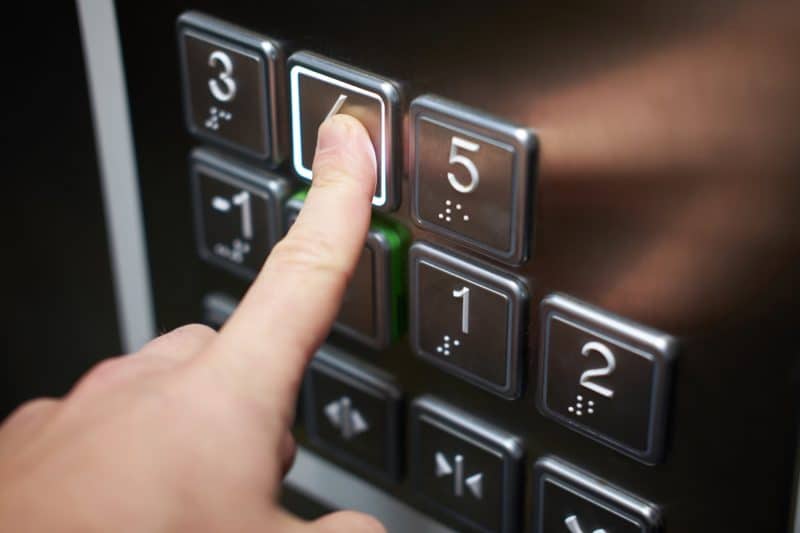
Grade 2 Braille must be below tactile characters with specific spacing that affects total sign dimensions, using standardized contractions that require certified translation to ensure accuracy for users who depend on this information for safe navigation. The dots themselves are 0.025 to 0.037 inches in height with millimeter-precise spacing that creates distinguishable patterns through dome shapes rather than flat-topped bumps that feel the same to trained fingers. Translation errors don’t just fail compliance inspections; they create dangerous situations where incorrect Braille sends people to mechanical rooms instead of restrooms or marks emergency exits as supply closets.
Why Does Contrast Math Override Visual Perception?
The required 70% light reflectance value difference between characters and backgrounds ensures partially sighted users can read the same signs they’re touching, demanding actual measurement rather than subjective assessments about whether colors appear different enough. We measure contrast ratios with spectrophotometers because human eyes adapt to ambient lighting while compliance standards remain fixed, accounting for how materials yellow and degrade over time to maintain legal contrast throughout the sign’s lifespan. Dark characters on light backgrounds generally provide better contrast stability than reverse combinations that show fingerprints and require frequent cleaning that affects reflectance values.
Professional Compliance Protects Your Investment
Understanding tactile ADA requirements protects your property from devastating lawsuits while creating navigation systems that serve everyone safely and effectively. North Coast Signs brings decades of specialized ADA expertise from our Vista headquarters to properties in Carlsbad, La Jolla, Encinitas and San Marcos that need to know their compliance status. Call (760) 536-5454 to schedule a professional assessment before plaintiff attorneys do.