North Coast Signs, based in nearby Vista and serving San Diego, prices a building-sign relocation on both the cost and the saving, showing why the old approval does not travel to a new address while a sound pan frame re-faces and re-hangs for a fraction of a new build.
A sign that has stood since 1988 and was last permitted in 2016 is moving a few blocks, and the owner assumes the hard part is the truck. The hard part is that the address is new, and the law prices the address. A relocation has a cost side and a saving side, and the saving side is usually the bigger one. Read both before you budget a new sign, because moving a sound sign is usually the lower-cost path and the one that keeps it legal.
Does the Old Permit Travel?
The old permit does not travel with it. A sign permit is tied to a sign at an address, so moving it re-starts the entitlement at the new location, with a fresh site plan, setbacks, mounting details, and owner consent. There is a sharper reason to handle the move on the books. A sign that was legal for years because it stayed put can lose that standing when it relocates, since most codes treat a moved sign as a new structure that must meet today’s rules. Handling the re-permit up front surfaces that at the drawing stage, before an inspector does.
Who Else Has to Say Yes?
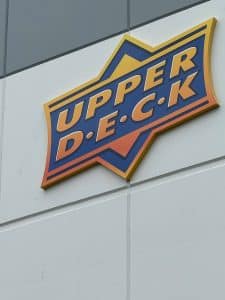
The city is rarely the slowest approver on a relocation. On many commercial and mixed sites an architectural review or an HOA board has to approve the sign on top of the municipal permit, on its own timeline and its own taste rules. On the Upper Deck move that HOA approval took the real effort and set the calendar, which is why we start it first. The re-permit clock runs at the speed of the slowest yes, and that yes usually belongs to a board nobody budgets time for.
Is the Frame Worth Moving?
Often it is worth every bit of moving. This sign is a non-illuminated aluminum pan frame with two-inch returns and painted edges, and its structure was sound after years on the wall. A sound frame does not get scrapped and re-fabricated. We re-face it, putting a fresh full-color vinyl face on the existing tray, which costs a fraction of fabricating a new sign from scratch, and you rebuild only when the frame is genuinely damaged. The two-inch returns still give it a finished dimensional edge, and the proven tray carries the new face at the new address. That is how a working sign becomes most of a new sign’s presence for far less of its price.
What Can the New Face Do for the Brand?
A re-face is also the opening to update the brand, because the skin is the part a passerby actually reads. We can carry the current logo, refresh the color, and lay out the graphics to the brand as it looks today, so the sign that goes up at the new address reads current rather than dated. The frame stays the same proven tray; the face is where the design moves forward. That is how a sign with decades of history arrives on the new building looking freshly made and on-brand, without paying for a new structure to get there.
How Does It Hang True on a New Wall?
It hangs on a French cleat, which is what makes a heavy sign seat flat and level. Two interlocking beveled cleats, one on the sign back and one on the wall, mate and carry the weight evenly while self-leveling the sign. We set the wall cleat, then a bucket truck lifts the re-faced frame onto it at height, and the sign drops into place true the first time. A cleat is a repeatable mount, so the sign ends up level and solid on the new facade.
Call North Coast Signs at (760) 536-5454 before you budget a new sign; if your frame is sound we will tell you, and we will start the new-address approvals that set the calendar.



Leave a Reply